How Long Should It Take to Clean an Office Building?
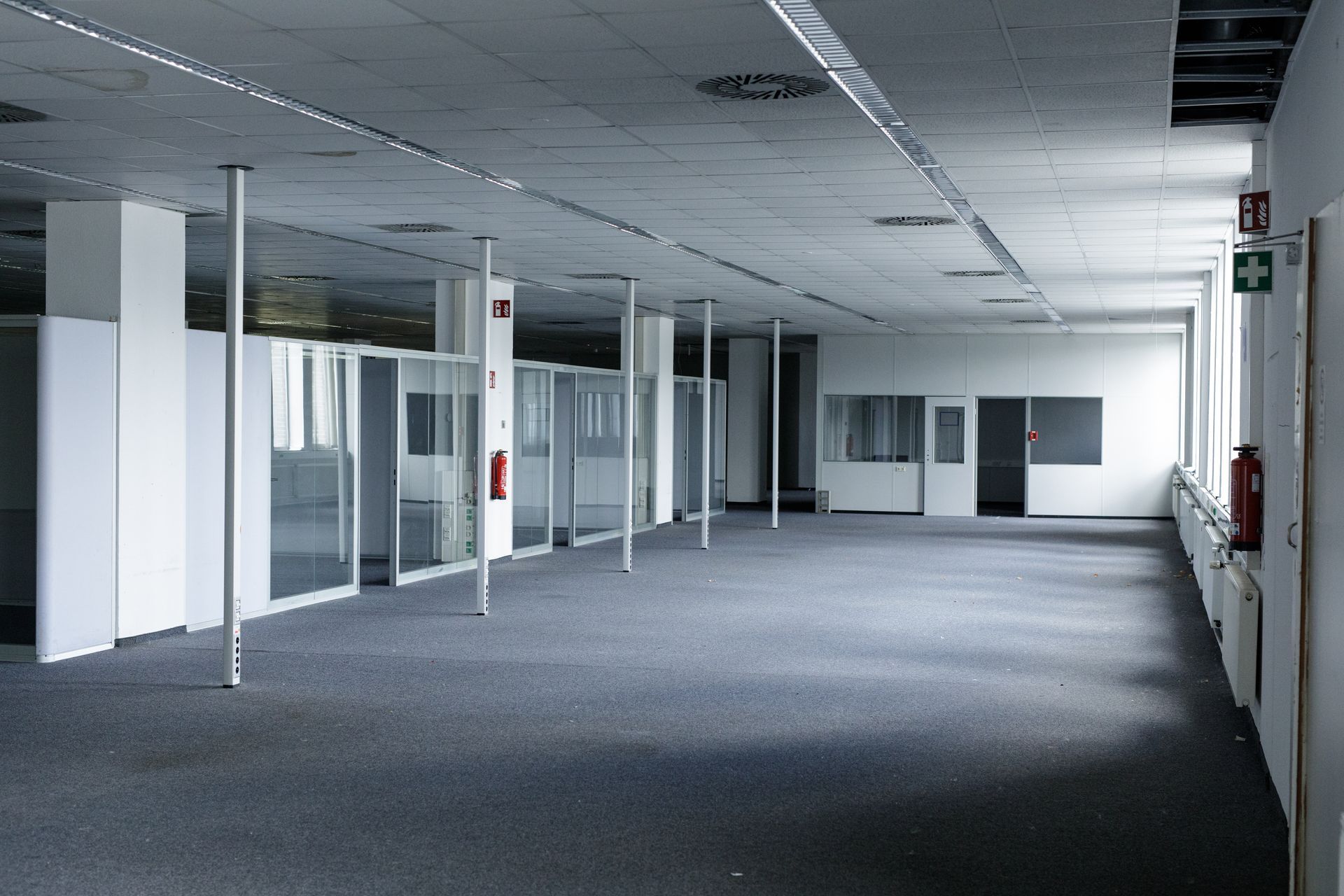
Cleaning time is not determined by square footage alone. A 20,000-square-foot office with low occupancy, limited restrooms and mostly open floor space may require far less labor than a smaller building with heavy restroom usage, dense workstations, multiple breakrooms and a more detailed cleaning scope.
That is why office cleaning estimates should be based on how the building is used, not just how large it is. Square footage matters, but labor time is also shaped by occupancy levels, restroom counts, flooring materials, traffic patterns and the specific tasks included in the scope of work.
Why Square Footage Alone Is Misleading
Commercial cleaning estimates often begin with square footage because it provides a basic understanding of the property's size.
However, square footage only tells part of the story.
Consider two 20,000-square-foot buildings. One may contain mostly private offices with a small staff, while the other could house hundreds of employees working in open workspaces with multiple breakrooms and restrooms. Despite being the same size, the second building will typically require significantly more cleaning time and resources.
Professional cleaning companies evaluate how the space is actually used rather than relying exclusively on square footage calculations.
Occupancy Levels Make a Major Difference
Higher occupancy generally means:
- More trash generation
- More fingerprints on doors and surfaces
- Increased restroom usage
- Greater breakroom traffic
- More dust and debris throughout the facility
A lightly occupied office may require only routine maintenance cleaning, while a fully occupied workplace can demand much more attention to maintain cleanliness and hygiene standards.
This is especially true in high-traffic areas such as reception areas, conference rooms, hallways and shared workspaces where employees and visitors regularly interact.
Restrooms Often Require the Most Labor
Restrooms are among the most labor-intensive areas in any office building.
Cleaning crews must thoroughly sanitize toilets, urinals, sinks, countertops, partitions, mirrors and high-touch surfaces while also replenishing consumables such as soap, paper towels and toilet tissue.
The number of restrooms and their frequency of use can dramatically impact cleaning times. A building with eight heavily used restrooms may require substantially more labor than a similarly sized building with only two.
In many facilities, restroom sanitation represents one of the most important aspects of the cleaning program due to its impact on employee health and workplace perception.
Breakrooms Add Additional Cleaning Requirements
Breakrooms often generate more mess than business owners expect.
Employee kitchens and lunch areas typically require:
- Countertop cleaning
- Sink sanitation
- Appliance wipe-downs
- Table cleaning
- Trash removal
- Spot cleaning of cabinets and surfaces
Coffee stations, microwaves, refrigerators and shared food preparation areas accumulate grime quickly when used by multiple employees throughout the day.
The presence of one or several breakrooms can significantly increase the amount of time needed during each cleaning visit.
Flooring Types Affect Cleaning Speed
Carpet
Carpeted spaces often require vacuuming throughout the facility, along with periodic spot treatment and deep cleaning services.
Hard Surface Flooring
Tile, luxury vinyl tile (LVT), laminate, concrete and other hard surfaces may require sweeping, dust mopping, wet mopping or machine scrubbing depending on the environment.
Mixed Flooring
Facilities that contain multiple flooring types often require more detailed cleaning procedures because crews must use different equipment and methods throughout the building.
A facility with extensive hard flooring and high traffic may actually require more maintenance time than a similarly sized carpeted office.
Scope of Services Creates Major Time Differences
Basic janitorial service may include:
- Trash removal
- Vacuuming
- Dusting
- Restroom cleaning
- Surface disinfection
More comprehensive programs may also include:
- Interior glass cleaning
- Detailed dusting
- Kitchen appliance cleaning
- Floor machine scrubbing
- High-touch point disinfection
- Day porter services
- Periodic deep cleaning
Naturally, a more detailed cleaning scope requires additional labor hours.
This is why comparing cleaning times between buildings can be misleading. Two facilities of similar size may have entirely different service requirements and therefore very different cleaning schedules.
Focus on Results, Not Just Time
Professional cleaning companies develop staffing plans based on the unique needs of each facility rather than trying to fit every property into a generic square-footage formula.
Speed and efficiency matter, but quality should remain the priority. The emphasis should be on maintaining a clean, healthy and professional environment for employees, visitors and customers every day.
Partner With Our Professional Cleaning Team Today in the Greater Phoenix Area!
Contact ProEthic Building Services at (480) 725-8912 to schedule a facility assessment and learn how our customized cleaning services can help maintain a healthier and more professional office environment.